
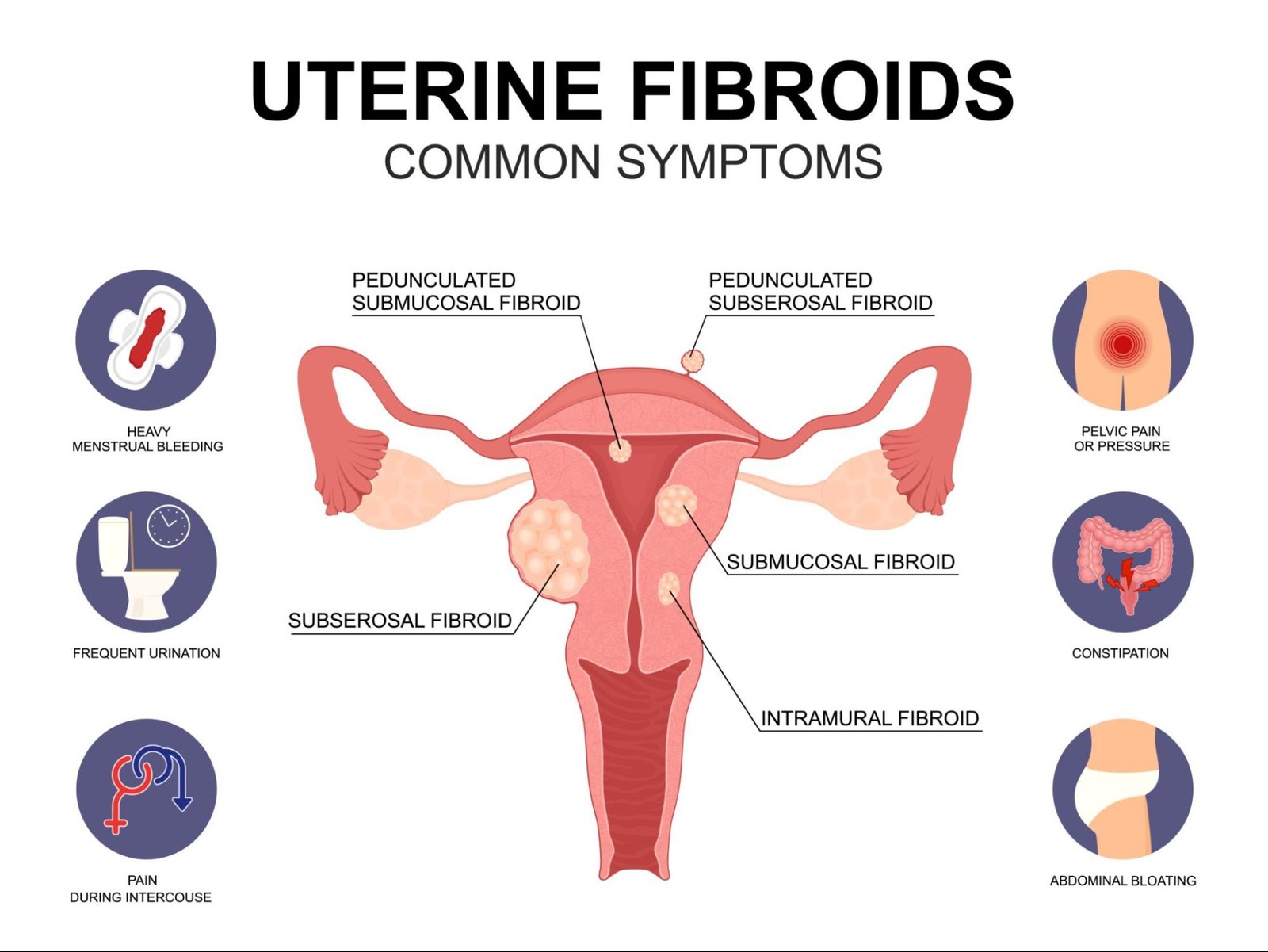
##1. What exactly are Fibroids? Fibroids are muscular growths that develop in or on the wall of the uterus. They can be as small as a seed or grow large enough to distort the shape of the womb. Every woman’s experience is different—some may have a single fibroid, while others have many.
##2. Recognizing the Symptoms While some women have no symptoms at all, others experience significant disruption to their daily lives. Look out for:
-Heavy Menstrual Bleeding: Periods that last longer than a week or require frequent pad changes.
-Pelvic Pressure: A constant feeling of fullness or "heaviness" in the lower abdomen.
-Frequent Urination: Large fibroids can press against the bladder, leading to more trips to the bathroom.
-Backache or Leg Pains: Sometimes the pressure radiates to the spinal nerves or down the legs.
##3. Common Myths vs. Facts -Myth: Fibroids always mean you need a hysterectomy.
-Fact: Many fibroids require no treatment at all, and for those that do, there are many "uterus-sparing" options like myomectomy or medication.
-Myth: Fibroids are cancerous.
-Fact: Fibroids are benign tumors and do not increase your risk of uterine cancer.
##4. When to See a Doctor You should schedule a consultation if you notice pelvic pain that doesn't go away, overly heavy or painful periods, or difficulty emptying your bladder. Early diagnosis via ultrasound allows for more treatment options and better outcomes.